

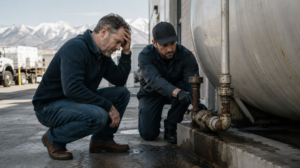
Running a business in Salt Lake City means planning for growth, customers, employees, deliveries, weather, equipment, and the unexpected interruptions that can stop an otherwise productive day in its tracks. Many business owners spend time thinking about sales, staffing, inventory, vehicles, job schedules, and customer service, but one operational detail often gets pushed aside until there is a real problem: fuel storage.
That mistake is not always dramatic at first. It may look like using an undersized tank, depending too heavily on last-minute fuel deliveries, ignoring changing fuel needs, or assuming an old tank is still good enough because it has not caused a major issue yet. Then an outage, storm, supply delay, equipment failure, construction deadline, or emergency backup need shows up, and the business suddenly realizes the fuel tank was not just a piece of equipment. It was part of the company’s ability to keep operating.
Salt Lake City continues to be a business hub with a mix of construction, transportation, logistics, service companies, contractors, industrial operations, and growing local enterprises. The city’s role as a regional commercial center has long been tied to transportation, trade, utilities, government, and professional services, making reliable infrastructure especially important for companies that cannot afford unnecessary downtime. Wikipedia’s overview of Salt Lake City notes the city’s historic and modern economic importance as a transportation and business center.
That is why fuel planning deserves more attention than many businesses give it. The wrong fuel tank decision can quietly create safety risks, compliance headaches, emergency delays, wasted money, and operational bottlenecks. 🚧
The Hidden Fuel Tank Mistake That Creates Bigger Business Problems
The biggest mistake many Salt Lake City businesses make is treating fuel tanks as a one-time purchase instead of an ongoing operational decision. A company buys a tank, installs it, uses it, and then assumes the problem is solved. But fuel needs change. Equipment fleets grow. Backup power requirements increase. Delivery schedules shift. Seasonal demand rises. Regulations evolve. A tank that made sense five years ago may no longer match the way the business actually operates today.
For contractors, this can mean crews waiting on fuel instead of getting to job sites. For logistics companies, it can mean vehicles being delayed during busy delivery windows. For industrial businesses, it can mean backup systems are not as dependable as leadership assumes. For commercial properties, it can mean generators or equipment do not have the fuel support needed during a disruption.
Local companies that follow regional economic updates already understand that Salt Lake City is not standing still. The Salt Lake City Department of Economic Development regularly highlights business growth, loans, development initiatives, and local economic activity, which reinforces how active the city’s business environment has become. As companies grow in a market like this, their infrastructure has to grow with them.
A fuel tank is not just a container. It is part of a business continuity plan. When it is too small, poorly placed, outdated, damaged, or not properly matched to the company’s fuel usage, it can become a weak point in the entire operation.
Why Fuel Storage Matters More in a Growing Salt Lake City Market
Salt Lake City businesses operate in a region where movement, construction, service calls, commercial growth, and transportation all matter. Many companies depend on vehicles, generators, heavy equipment, heating systems, fleet yards, warehouses, or job-site fuel access. In these industries, fuel is not just another supply item. It is what keeps revenue-producing work moving.
This is especially important for businesses that serve customers across Salt Lake City, the Wasatch Front, and surrounding areas. Delays can quickly affect scheduling, reputation, and profitability. When a company cannot fuel its vehicles or equipment efficiently, the issue spreads into employee productivity, customer satisfaction, and job completion.
The Salt Lake Chamber describes itself as a voice for business and a supporter of community prosperity, which fits the broader reality of operating in a competitive local economy. Businesses that want to compete in that environment need systems that support reliability, not systems that create hidden friction.
Fuel tanks can support that reliability when they are chosen correctly. The right tank can reduce downtime, improve access to fuel, support emergency readiness, and help companies avoid depending entirely on outside delivery timing. The wrong tank can do the opposite. It can create recurring problems that only become obvious when the company is under pressure.
The Cost of Waiting Until There Is an Emergency
The most expensive time to discover a fuel tank problem is during an emergency. At that point, the business is no longer making a calm equipment decision. It is reacting under pressure. That can lead to rushed purchases, limited options, higher costs, delayed service, and avoidable downtime.
Emergency situations can include power outages, severe weather, delivery disruptions, equipment surges, unexpected project demands, or increased fuel consumption during peak seasons. Even a temporary disruption can create real losses when employees are waiting, customers are calling, trucks are sitting, or machines are idle.
Business owners often think about emergency planning in terms of insurance, data backups, security systems, or staffing coverage. Those are important, but fuel should be part of the same conversation. A backup generator is only useful if the business has dependable fuel access. A fleet is only productive if it can keep moving. A job site is only efficient if equipment can stay running.
Companies that follow Utah Business can see how much attention is given to growth, leadership, innovation, and the people behind Utah’s business success. Fuel planning may not sound as exciting as expansion or marketing, but it is the kind of behind-the-scenes decision that protects the growth a business has already earned.
Choosing the Right Fuel Tank for the Way the Business Actually Works
A better fuel tank decision starts with understanding how the business uses fuel now and how it may use fuel in the future. That includes the type of fuel needed, how often it is used, where it is stored, how quickly it needs to be accessed, and what equipment or vehicles depend on it.
Some companies need on-site fuel storage for convenience and productivity. Others need tanks for backup power, fleet fueling, construction equipment, agricultural use, or industrial operations. Some need above-ground storage, while others may require a different configuration based on space, safety, access, and regulations.
This is where professional guidance matters. A business should not choose a fuel tank based only on price or availability. It should choose based on application, capacity, safety, compliance, installation needs, and long-term use. Businesses looking for trusted local help with Fuel Tanks Salt Lake City can benefit from working with a provider that understands local business needs, equipment demands, and the importance of reliable fuel storage.
The right tank should fit the company’s actual operation. A small business with limited equipment may not need the same setup as a contractor managing multiple crews. A commercial facility using backup power may have different needs than a transportation company fueling trucks. A growing business should also think beyond today’s minimum requirement and consider whether the tank can support future demand.
Compliance and Safety Should Never Be an Afterthought
Fuel storage comes with responsibilities. Businesses have to think about placement, containment, labeling, access, fire safety, maintenance, environmental concerns, and local requirements. Ignoring those details can create risks that are much larger than the price of the tank itself.
A poorly maintained or improperly selected tank may lead to leaks, contamination, fuel loss, safety hazards, or regulatory issues. Even when a tank appears to be working, it may not be the safest or most efficient option. That is why inspection, maintenance, and proper installation matter.
Salt Lake City businesses should also pay attention to broader state and local economic guidance because growth often comes with more formal operational expectations. The Utah Governor’s Office of Economic Opportunity manages programs and initiatives designed to support Utah businesses, entrepreneurs, and economic development. As companies become more established, they often need stronger systems, better documentation, and more dependable infrastructure.
Safety is not just about avoiding fines or problems. It is about protecting employees, property, customers, and the company’s reputation. A reliable fuel tank setup helps a business operate with more confidence because the company knows one of its essential resources is being handled properly.
Fuel Tanks and Business Continuity in Salt Lake City
Business continuity is the ability to keep operating when conditions are not perfect. For many Salt Lake City businesses, fuel storage is directly connected to that ability. A company that has the right tank, the right fuel supply, and the right maintenance plan is better prepared for disruptions than one that simply hopes fuel will be available when needed.
This matters for companies that run service vehicles, maintain equipment, support facilities, manage crews, or rely on generators. It also matters for businesses that have customers depending on them during difficult conditions. When competitors are delayed, the company with better preparation may be the one that keeps serving customers.
The Deseret News business section covers Utah business developments and local economic updates, showing how active and diverse the state’s business landscape is. In an environment where businesses are constantly adapting, the companies that plan ahead often have a stronger foundation than those that only react after a problem appears.
Fuel tanks are part of that foundation. They support uptime, efficiency, emergency response, and daily workflow. They may not be the most visible part of a business, but they can become one of the most important when operations are under pressure.
The Long-Term Value of Better Fuel Planning
A properly selected fuel tank can provide long-term value in several ways. It can reduce fuel access delays, help manage supply more efficiently, support equipment uptime, and provide peace of mind during outages or busy seasons. It can also help businesses create a more organized approach to fuel purchasing and usage.
Better fuel planning can also reduce stress on managers and employees. When fuel is always a last-minute issue, someone has to solve the problem repeatedly. That takes time and attention away from more productive work. A better system gives the business more control.
For business owners watching local trends, resources like the Salt Lake Chamber Roadmap to Prosperity Dashboard provide economic context for decision-makers in Utah. While a dashboard may not tell a company which fuel tank to buy, it reinforces the importance of making decisions with data, planning, and long-term stability in mind.
The same mindset applies to fuel tanks. Business owners should look at current usage, future demand, risk exposure, emergency needs, and operational goals. Then they should choose a tank solution that supports the business instead of limiting it.
Conclusion
The fuel tank mistake too many Salt Lake City businesses do not notice until it is too late is simple: they wait until there is a problem before treating fuel storage as a serious business decision. By then, the issue may have already caused downtime, delays, safety concerns, emergency costs, or missed opportunities.
A fuel tank should never be viewed as an afterthought. It should be viewed as part of the company’s operating system. The right fuel tank can support productivity, emergency readiness, compliance, safety, and long-term growth. The wrong tank can quietly create problems that only become obvious when the business needs reliability the most.
Salt Lake City’s business environment continues to move forward, and companies that want to stay competitive need dependable systems behind the scenes. Fuel storage is one of those systems. Taking the time to choose the right tank, maintain it properly, and plan for future needs can help a business avoid expensive surprises and stay ready for whatever comes next.